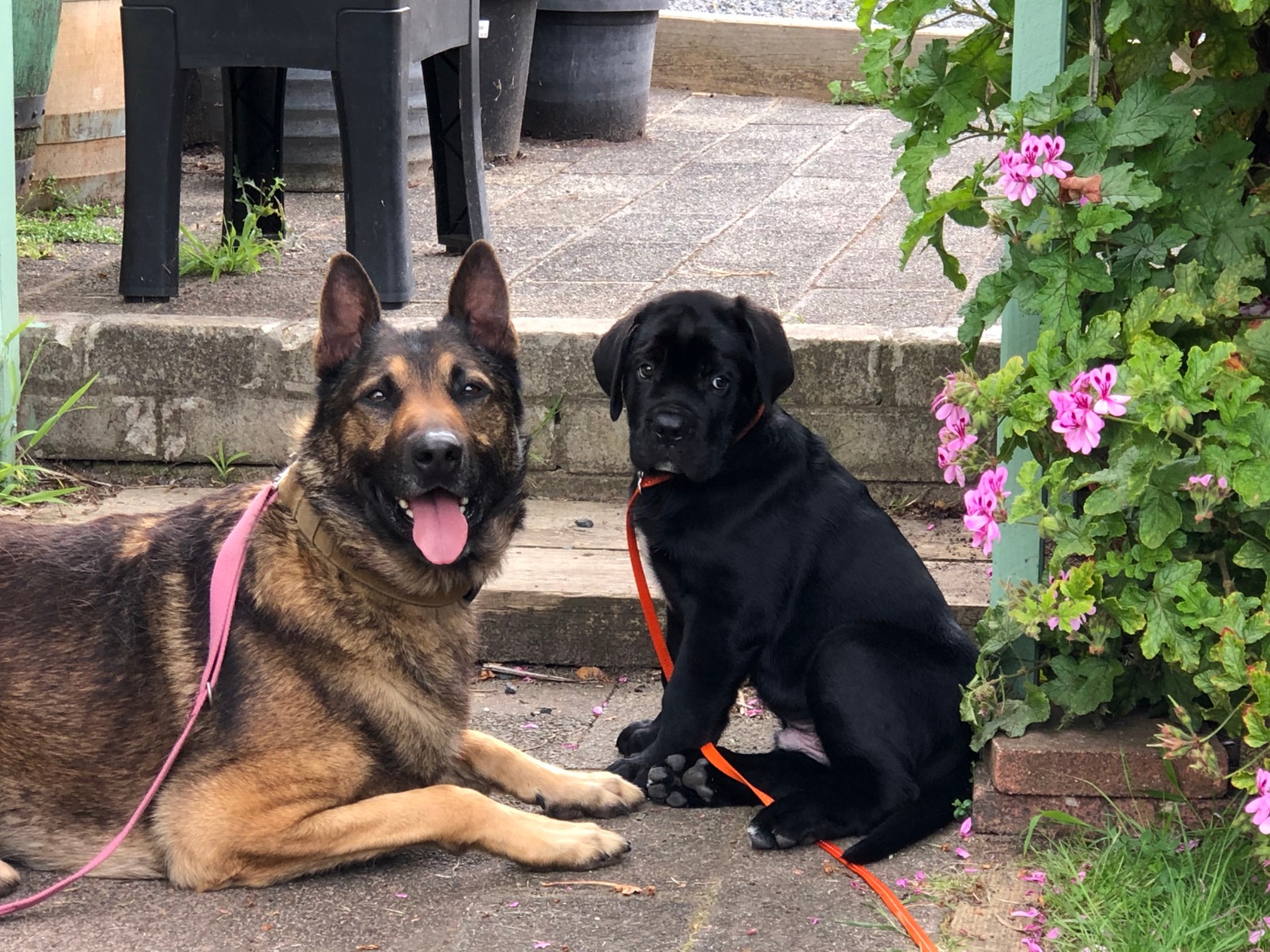
Puppy Training Melbourne
If you have just brought a new puppy home in Melbourne, chances are you are somewhere between completely besotted and quietly overwhelmed.
That is entirely normal — and it is exactly the right time to get things started on the right foot.
In my experience, there is nothing more satisfying in this work than giving a puppy the right foundations early.
The science around puppy development is extensive and what it tells us is clear — the work you put in during those first few months has a profound and lasting impact on the adult dog your puppy becomes.
The deficiencies that come from getting this period wrong are not subtle. They show up years later and they are hard to undo.
The practical side of it, though, can be genuinely tricky. Puppies are squirming, distracted, easily overwhelmed little creatures, and engaging them effectively during training is a real skill.
My job is to direct that energy into activities that are stimulating and beneficial rather than simply letting a puppy please itself — which, left unchecked, is what most of them will happily do all day long.
As a puppy trainer based in Melbourne, I come to you — because that is where it all begins.
Engagement
Think about how your dog behaves away from home.
Does it check in with you, stay aware of where you are, respond when you call? Or does it put its nose down, wander off, and essentially forget you exist?
While independent exploration is natural canine behaviour, a companion dog should be responsive to its owner — not occasionally, but reliably.
This isn’t just about convenience; it is genuinely about safety.
A dog that is not under effective control is a dog that can cause serious harm to itself or others, and the law reflects that.
Engagement starts from the day the puppy comes home.
From day one, I encourage owners to teach their puppy to look at them, to find them interesting, and to understand that paying attention to the person at the end of the lead is rewarding and fun.
Sniffing and exploring absolutely has its place — but it should happen on your terms, not the puppy’s.



Socialisation
Socialisation is one of the most misunderstood concepts in puppy raising, and getting it wrong has real consequences.
Most people interpret socialisation as simply exposing a puppy to the world — other dogs, people, traffic, noise — and letting it absorb everything. And while exposure matters, that approach alone teaches a puppy to tune out its owner and immerse itself in its own experience. Over time, that puppy becomes a dog that has learned the world is more interesting than you are.
What I teach instead is what some trainers call neutral socialisation. The puppy is introduced to new environments and experiences, but throughout that process it is regularly brought back to check in with its owner. The puppy learns that the world is not something to fear — and also that its owner is the most interesting thing in it. Calm, confident, and connected. That is the goal.
Every puppy goes through critical periods of development — windows of time during which experiences leave a lasting imprint on temperament and behaviour. The main window opens at around three weeks of age, which is why choosing the right breeder matters, and closes at around sixteen weeks. By the time most puppies come home at eight weeks, roughly half of that window is already gone. That means there is no time to waste.
These are the same principles used by law enforcement and government agencies the world over to produce dogs that are confident, capable, and deeply connected to their handlers. The same approach works just as well for the family pet.
If you are looking for puppy training in Melbourne and want to give your puppy the best possible start, I would love to help you do that. Get in touch and we can talk through where to begin.